

North India Lottery: Online Rules and Legality 2026


Many people search for “North India lottery” expecting to find one official scheme. The phrase does not point to one. It sits where state lottery law, the 2025 online gaming law, payment rules and fraud risk overlap, so a wrong assumption can cost real money. This article explains what is established, what I observed, and what I could not confirm, as of November 2026.
North India Lottery is a search term associated with online lottery services and results, not a verified nationwide government lottery. In India, state-organised lotteries are regulated under the Lotteries (Regulation) Act, 1998, while online money gaming faces national restrictions. Legality depends on the organiser, sales method and applicable state rules. Unverified lottery websites may carry financial and fraud risks.

What Is North India Lottery?
The short answer: North India Lottery is a search phrase, not a confirmed official scheme. It appears in queries about online lottery services and draw results. A private website may also use it as a brand name. Neither use shows that any government organises a lottery under that name.
The words can describe four different things. They can be a geographical label for lotteries sold in northern states, a privately branded internet service, a real government scheme, or an information page that only republishes results. Each of these has a different legal position.
A name carries no legal weight. Under the Lotteries (Regulation) Act, 1998, only a State Government can organise a state lottery, and that state decides what its schemes are called. A website cannot create an official scheme by choosing a regional name.
What I observed: on 11 November 2026 I ran one general web search for the exact phrase. The results were mostly general legal explainers, results-app listings and commercial lottery-review pages. None was an official state source using the name. That is a limited observation, not proof that no such site or scheme exists.
Is North India Lottery an official government lottery?
Not independently verified. I could not confirm a notified State Government Lottery scheme called North India Lottery in any official source I reviewed. I also could not confirm who runs any similarly named private website, whether it holds any authorisation, or whether its draws take place. I make no claim that any named site is lawful or unlawful.
Until a state lottery department publicly confirms a scheme by name, the name should be treated as unverified. The exact phrase identifies a search term, and its meaning has to be established separately for every website that uses it.
How Online Lotteries Work in India
A lawful state lottery follows one basic chain: an organising authority, a ticket or entry record, an authorised seller, a draw, published results and a claim check. The Lotteries (Regulation) Rules, 2010 describe an online lottery in terms of computer-generated tickets registered on a central server at lottery terminals. Nothing in that description says that any website can sell to any user.
| Format | Who organises it | How an entry is recorded | Where verification should come from | Status note (as of November 2026) |
|---|---|---|---|---|
| Paper state lottery | A State Government | Printed ticket with a serial number | Draw and result published by the state lottery department | Falls under the 1998 Act and 2010 Rules; other states may restrict sales |
| Government online terminal | A State Government, with an appointed seller or system provider | Computer-generated ticket registered on a central server | State records and the state’s own result publication | Recognised in the 2010 Rules; not the same as open internet sales |
| Private internet lottery service | A private company | Entry record held on the company’s own system | Only the company’s own pages, unless a state confirms the arrangement | Not established by the website’s own statements; needs legal review |
| Results-only website | Any publisher | No entries are taken | Comparison with the state department’s own publication | Publishing results differs from organising or selling lotteries |
Online lottery terminals versus lottery websites
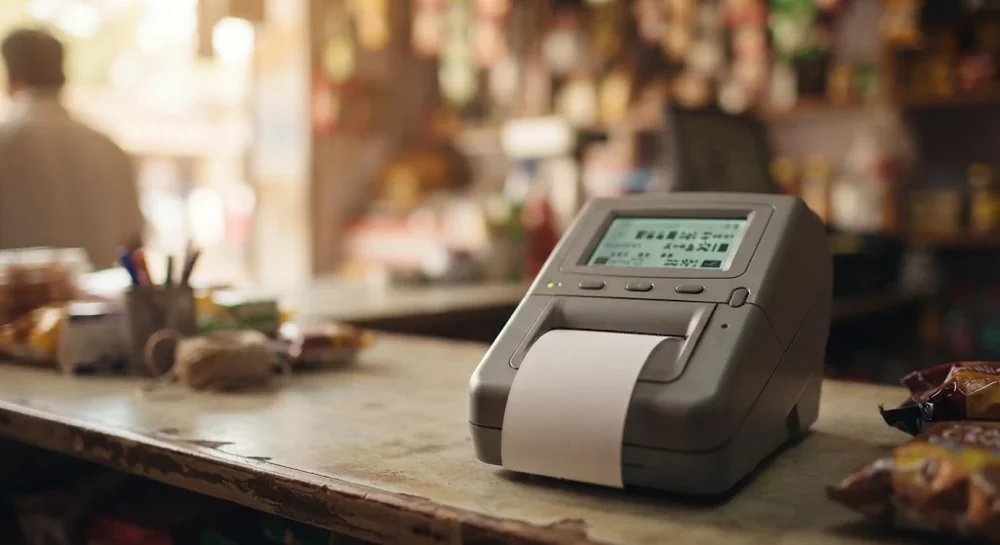
An online lottery terminal is a government-controlled point of sale connected to a central server. A lottery website is a page run by someone, and the page alone does not say who that someone is. In the 2010 Rules, the word “online” describes how tickets are generated and registered. It does not mean a mobile application open to any user.
Result portals and private number-betting interfaces add more confusion. A site that lets people stake money on the outcome of a lottery draw is not itself running that lottery, and betting on results is a separate legal matter. Keeping these formats apart resolves most of the confusion. A result page, a terminal sale and a private entry service are three legally distinct things, even when they look alike on a screen.
Is North India Lottery Legal in 2026?
The legal status of any service called North India Lottery cannot be decided from its name. It depends on who organises the scheme, how tickets are sold and which state the buyer is in. The central framework has two layers, covered below, and I am not a lawyer.
The Lotteries (Regulation) Act, 1998 is the central law for state lotteries. Section 3 allows a State Government to organise, conduct or promote a lottery, subject to the conditions in Section 4. Those conditions deal with matters such as the state being the organiser and prize and draw rules. Section 5 allows a state to prohibit the sale of tickets of other states’ lotteries within its own territory.
The Lotteries (Regulation) Rules, 2010 add detail, including the computer-generated and central-server model. Draw frequency limits have been described differently across older texts and later amendments. Anyone relying on such a limit should check the operative, amended text, not an old summary.
What changed under the 2025 online gaming law?
The Promotion and Regulation of Online Gaming Act, 2025 received presidential assent in August 2025. Secondary legal commentary I reviewed reports that the Ministry of Electronics and Information Technology issued gazette notifications on 22 April 2026. These notifications brought the Act and the Promotion and Regulation of Online Gaming Rules, 2026 into force from 1 May 2026.
The same commentary reports that the Act prohibits offering online money games, and advertising them or facilitating payments for them. It also reports that the Rules set up the Online Gaming Authority of India. I read these points in secondary summaries and did not review the gazette text myself. The commencement details should be confirmed against the official notifications.
Are state-run lotteries automatically exempt?
I could not establish that. State lotteries are governed by their own specific law, and a state lottery cannot be resolved simply by calling it an online game. Whether a state lottery delivered through a website or app falls inside the Act’s definition of an online money game is a question of statutory interpretation.
The sources I reviewed did not settle that question, and I did not find an authoritative text that does. Any claimed exemption, whether it comes from a website or from a commentator, should be tested with a qualified Indian lawyer before anyone relies on it.
The two frameworks therefore do not simply replace each other. The 1998 Act and 2010 Rules regulate state lotteries, and the 2025 Act and 2026 Rules regulate online money gaming. How they interact for internet-delivered lottery products is not conclusively resolved in the materials I could access, as of November 2026.
Lottery Laws Across Northern Indian States
A state lottery law on paper is not evidence of an active scheme. A historical framework, a currently operating lottery and permission to sell tickets online are three separate facts. Published state counts of nine, ten and thirteen differ because their authors mixed these categories, and I did not find a current official list to settle it.
| State | Government scheme verification | Ticket-sales restrictions | Online-sales verification | Source date |
|---|---|---|---|---|
| Delhi | No active state-run scheme confirmed in sources reviewed | Not independently verified | Not independently verified | Public sources, 11 November 2026; gazette not checked |
| Uttar Pradesh | No active state-run scheme confirmed in sources reviewed | Not independently verified | Not independently verified | Public sources, 11 November 2026; gazette not checked |
| Haryana | No active state-run scheme confirmed in sources reviewed | Not independently verified | Not independently verified | Public sources, 11 November 2026; gazette not checked |
| Rajasthan | No active state-run scheme confirmed in sources reviewed | Not independently verified | Not independently verified | Public sources, 11 November 2026; gazette not checked |
| Punjab | Punjab State Lotteries is named in public sources; current scheme status to be confirmed with the department | Not independently verified | Not independently verified | Public sources, 11 November 2026; department not contacted |
| Sikkim (comparison) | Sikkim State Lotteries is a state-operated system named in public sources | Not independently verified | Not independently verified | Public sources, 11 November 2026 |
| Kerala (comparison) | Kerala State Lotteries, reported as established in 1967, is a state-run department | Not independently verified | Not independently verified | Public sources, 11 November 2026 |
The rows for Delhi, Uttar Pradesh, Haryana and Rajasthan mean only that I found no confirmation. They do not mean that lotteries are banned or permitted there. Each state’s own notifications decide that.
Punjab has a state lottery framework, but that does not show that an internet site selling Punjab entries is authorised. Sikkim and Kerala are illustrations of state-operated systems in different jurisdictions. Their existence says nothing about whether a reader in Delhi or Uttar Pradesh may buy their tickets, because Section 5 of the 1998 Act lets each state restrict outside tickets. A state lottery’s existence also never proves that internet ticket sales are lawful.
How to Verify Lottery Websites and Results
The safest default is to treat an unfamiliar lottery website as unverified until a government source confirms it. This checklist is defensive and is not a purchasing guide.
- Identify which State Government the website says organises the lottery. If no state is named, stop there.
- Find that state’s lottery department through an independent route, such as the state government’s own directory. Do not use contact details given on the website itself.
- Look for the state’s gazette notification of the specific scheme and compare its name and rules with the website’s claims.
- Check whether the state itself confirms the seller or distributor the website claims. An authorisation claim made only on the seller’s own page proves nothing.
- Establish whether the site sells entries or only publishes results. A results page is not evidence that a separate ticket-selling website has official authorisation.
- Compare draw dates and results with what the state department publishes. Any mismatch is a serious warning.
- Look for pressure signals: urgent countdowns, requests for identity documents before any result, or payment through personal accounts.
- Stop if official confirmation is absent at any step. No further step is needed to reach that conclusion.
What can a website claim without proving?
A website can show a lock icon, a downloadable ticket, a countdown timer, a payment form or a government-style emblem without any authorisation. The lock icon only shows that the connection is encrypted. It says nothing about who runs the site or whether the operator is authorised. A professional interface proves only that someone built one. An emblem can be copied by anyone.
Checking official lottery results safely
Results should be checked on a state government department’s own publication, reached by typing the department’s name yourself or through a government directory. Do not use links received in messages. A screenshot of a result proves nothing, because images are easy to edit. If a result received in a message matches nothing on the official channel, treat it as fabricated.
International Lotteries and RBI Payment Rules
An overseas licence does not give any operator permission to serve Indian residents. A foreign regulator licenses activity under its own country’s law, and that law has no force in India. Being able to open a foreign website from India is a technical fact. It is not a legal authorisation.
Payments are a second, separate question. Under the Foreign Exchange Management Act, 1999 (FEMA), the Reserve Bank of India (RBI) and the Government of India restrict certain current-account remittances. As I understand the current-account rules, these include remittances connected with lottery tickets and lottery winnings. I did not re-read the operative rule text for this article, so the exact wording should be confirmed on the RBI’s website.
This payment restriction is separate from the statutory question of whether a lottery may be operated. A lottery could be questionable under one framework and a payment could be restricted under another. For readers, the practical consequence is the same: sending money abroad for lottery entries may be restricted, and the 2025 online gaming law may add a further problem.
I will not describe payment routes, account arrangements or anything similar, because workarounds to these controls are not appropriate. The practical risks are plain. Card or bank details given to an unverified foreign site may be misused. Personal data may be sold or leaked. And if a dispute arises, an overseas operator may be beyond any redress available in India.
Lottery Winnings, Taxes and Claim Verification
A published result, an authentic winning ticket and an enforceable claim are three different things. A result is a list of numbers. A ticket is genuine only if the organising state’s records match it. A claim succeeds only through the state’s authorised claim process, which usually sets documents and time limits. Those requirements differ by state and scheme, so the lottery department’s published rules decide.
On tax, winnings are taxed as a separate income category. As of November 2026, commentary on the Finance Act 2025 amendments says that tax deduction at source on lottery winnings applies where winnings in a single transaction exceed INR 10,000. Before 1 April 2025 the test was winnings aggregating above INR 10,000 in a financial year. The deduction rate is commonly stated as 30%, and surcharge and cess treatment should be checked.
The Income-tax Act, 2025 took effect on 1 April 2026 and renumbers provisions. Tax commentary reports that the old Section 194B of the Income-tax Act, 1961 now corresponds to Section 393(3) of the new Act, table serial 1. Confirm the mapping against the Act’s text, and ask a chartered accountant about your own case.
Lottery GST is a different matter. It is a tax on the supply of lottery, paid on the organiser’s and seller’s side, and it is not deducted from a winner’s prize. Official parliamentary information indicates that the GST rate on lotteries changed from 28% to 40% effective 22 September 2025. I did not reconfirm this against the GST Council or CBIC record, so it should be checked again before relying on it.
No official process asks a winner to pay an advance “release fee”, “clearance charge” or “tax” to a personal account or a messaging contact. Tax on winnings is deducted by the payer. A demand of that kind is a scam warning.
North India Lottery Scams and Warning Signs
The risk you should know about first: lottery fraud usually begins with a prize you never entered for. Typical patterns include:
- Fake winnings: a message, call or email says you have won a large sum from a lottery you did not enter.
- Paid verification: you are asked to pay a processing fee, tax or “insurance” before the prize is released.
- Impersonation: the sender claims to be from a government office, a bank or a lottery department, often with copied logos and official-looking letters.
- Messaging-app approaches: contact arrives through a messaging app from an unknown number, with pressure to move quickly.
- Edited result screenshots: an image shows your “ticket number” as a winner. Images can be altered, and the official publication is the only check.
- Identity collection: requests for PAN, Aadhaar or bank details, which can be misused for loans, accounts or further fraud.
- Phishing and OTP theft: links or forms that capture passwords, or a request for an OTP “to confirm your identity”. An OTP gives access to your money. Nobody legitimate needs it from you.
What if I have already paid a lottery scammer?
Speed matters more than anything else. The steps below are general guidance, not legal advice.
- Stop all contact with the sender and do not send any more money, even if threatened or promised a refund.
- Call your bank or card issuer using the number printed on your card or on its official website, and ask it to block the transaction or account.
- Preserve evidence: screenshots of messages, phone numbers, account details, transaction IDs and dates. Do not delete anything.
- Report the fraud. Indian government cybercrime guidance lists 1930 as the national helpline for financial cybercrime, and complaints can also be filed on the national cybercrime reporting portal. Confirm the number on the official portal before calling.
- If you shared PAN, Aadhaar or passwords, change passwords and ask the relevant institutions what protective steps are available. A lawyer or cyber-security specialist can advise on your case.

What I Checked and Responsible-Gambling Advice
What I checked, and what I could not check: I did not create any account, make any payment or contact any website, department or official for this article. My work was limited to public materials.
- Established in legal documents or official-style reporting: the structure of the 1998 Act and 2010 Rules as I understand them, the 2025 Act’s assent in August 2025, and the 2026 Rules’ effective date of 1 May 2026. For the last two I relied on secondary summaries of the notifications.
- Observed in search results: a general mix of legal explainers, results apps and commercial lottery-review pages for the exact phrase, on 11 November 2026.
- Not independently confirmed: any official scheme, operator, authorisation or draw behind the name North India Lottery, the current active state list, and how the 2025 Act applies to state lotteries sold online.
My opinion, labelled as such: the number of conflicting online summaries is a reason for more caution, not less. When even lawyers disagree about the overlap, a website’s own legality claim deserves little weight.
Before trusting any lottery claim, ask these four questions in order:
- Is the organiser a verified state authority?
- Is the sales channel lawful under current central and state law?
- Does the law of your own state permit the activity?
- Can officially published evidence support the claim?
A “no” or “unknown” to any question means you should not proceed. Check the law of your state before you play anywhere.
Gambling is addictive and can cause serious financial loss. It is for adults aged 18 and above only, and being 18 does not make it lawful where it is prohibited. Online real-money gaming is restricted in India under national law adopted in 2025. Never play with money you cannot afford to lose. If you feel you are losing control, Tele-MANAS, the government mental-health helpline, is reachable on 14416. Please confirm the number on the official Tele-MANAS page.
Frequently Asked Questions
Is North India Lottery legal in India?
The name North India Lottery does not establish that any service is legal or government-authorised. India permits qualifying state-organised lotteries under the Lotteries (Regulation) Act, 1998, while national restrictions apply to online money gaming. A particular website’s status depends on its organiser, authorisation, sales model and applicable state rules, so legality cannot be assumed from the name.
Can I buy lottery tickets online in India?
There is no general permission to buy lottery tickets through any website in India. The 2010 lottery rules recognise government-operated computerised systems, which are not the same as unrestricted internet sales. The 2025 online gaming law adds further restrictions. Check current central and state law and take qualified advice before treating any online ticket service as lawful.
How do I know whether an online lottery is genuine?
Check whether an identifiable State Government organises the lottery and has officially authorised both the scheme and the seller. Compare any claimed draw with results the state publishes independently. A professional website, payment form or result screenshot proves neither legality nor authenticity. Never share identity documents, passwords or OTPs with unverified services.
Which states in India allow government lotteries?
The lottery framework lets qualifying State Governments organise lotteries, but active schemes and local restrictions change. Punjab, Kerala and Sikkim have documented state lottery operations in public sources. Published totals of nine, ten or thirteen states differ because some lists include inactive or historical schemes. Confirm the current position with each state’s lottery department, not an undated list.
Are international online lotteries legal for Indian residents?
An overseas licence does not give an operator permission to serve Indian residents. Foreign-exchange rules under FEMA, as set out by the Reserve Bank of India, restrict remittances connected with lottery tickets, and the national online money gaming provisions may add further problems. A website being reachable from India does not make buying entries or sending money lawful.
What should I do if a lottery website asks for money to release my prize?
Treat any unexpected request for advance taxes, processing fees or verification payments as a serious fraud warning. Do not transfer money or share banking details, passwords or OTPs. If you have already paid, contact your bank immediately, keep all messages and transaction records, and report the incident through official cybercrime channels, including the 1930 helpline.
Final Takeaways
North India Lottery, as a name, tells you nothing about legality. In my reading, state lotteries have their own legal basis in the 1998 Act and 2010 Rules, and online money gaming has been under a national framework since 1 May 2026. How the two meet for internet-delivered lottery products is not conclusively settled in the materials I could access.
The practical rules are simple. Verify the organising state, check the sales channel and your own state’s law, rely only on officially published results, and treat any advance-fee demand as fraud. If something cannot be confirmed, do not send money or documents.
This article is general information as of November 2026 and is not legal, tax or financial advice. Laws, rates and helpline numbers may change, so consult a qualified Indian lawyer or chartered accountant for your own situation. Gambling is for adults aged 18 and above only and can cause addiction and financial loss.